
Chief Economic Advisor V Anantha Nageswaran highlights the challenges of digital access, data governance, interoperability, and cyber security in India's digital public infrastructure (DPI), despite its world-class scale.

BJP MP Raghav Chadha addressed the 12th IPU Global Conference of Young Parliamentarians in Samarkand, Uzbekistan, highlighting India's digital transformation journey. He emphasised how technology is widening access and promoting inclusion, citing UPI's success, affordable data, and robust data protection laws. Chadha also discussed India's digital cooperation with Uzbekistan and the importance of digital rights, safety, and skill development for all citizens.

Computer-based testing can make the examination more secure and transparent. Ensuring equal opportunities to prepare will make it fair as well. India needs both, suggests Dibyasree Ganguly.

The Supreme Court of India has directed changes in digital know your customer (KYC) guidelines for persons with disability and acid attack survivors, citing the right to digital access as an intrinsic component of the right to life under Article 21 of the Constitution. The court found that existing KYC procedures, which require visual tasks such as head movements and facial positioning, pose significant challenges for these groups, preventing them from accessing essential services like bank accounts and welfare schemes. The court emphasized the importance of bridging the digital divide and ensuring universal accessibility to digital services for all citizens.

Despite near gender parity in basic bank account ownership, women in India remain significantly underrepresented in the growing platform economy due to gaps in digital financial capability and access to credit, according to a joint report by the International Labour Organization and National Council of Applied Economic Research.

The Supreme Court has declared that children have a fundamental right to access and use the internet, directing the Centre to establish a national database for detecting and removing child sexually explicit visual content. The ruling, stemming from a plea by NGO Just Rights for Children Alliance, emphasises the internet's value for learning and expression while acknowledging the need for safeguards like parental consent and a "child mode" for accounts, rather than blanket restrictions.

The Indian Super League (ISL) has partnered with YouTube to stream all 163 matches live and free for the 2026-27 season, aiming to expand its digital reach and remove subscription barriers.

IIIT Hyderabad and measurement technologies firm Hexagon R&D India have collaborated to establish the Hexagon Digital Twin Centre of Excellence (CoE) at the IIIT Hyderabad campus. This CoE will focus on applied research, education, and industry collaboration in computer vision, spatial computing, and AI-powered digital twins, providing access to advanced imaging technology.

Prime Minister Narendra Modi emphasised the democratisation of technology to ensure no section of society is left behind, advocating for affordable and accessible digital services, especially for the Global South. He highlighted the potential of Digital Public Infrastructure (DPI) and called for solutions to cyber fraud, global standards for emerging tech, and mechanisms to identify AI-generated content during his interaction with GSMA board members.

PhonePe has announced a significant expansion plan to deepen digital payment infrastructure across India's towns and villages. This initiative includes hiring over 20,000 sales personnel and deploying more than 50 lakh payment devices, with a strong focus on rural areas, aiming to bring small merchants into the formal financial ecosystem.

India's MSME sector faces a significant formal credit gap of approximately Rs 60 lakh crore, with traditional channels meeting only a fraction of the demand. A new report suggests that a centralised, interoperable digital layer could effectively bridge this gap and enhance productivity across the formal business sector by digitising workflows and enabling cash-flow-based underwriting.

PhonePe, at the Global Fintech Fest 2026, unveiled its strategic vision for the next decade, focusing on inclusive digital progress for individuals, households, and businesses across India. The roadmap details innovations in financial inclusion, wealth creation, credit access, and merchant solutions.

The Supreme Court has made permanent its order protecting a journalist from coercive action in a road rage case and quashed a police notice to 'X' seeking his digital details. The court noted the police sought data from before the alleged crime and granted the journalist liberty to challenge the FIR and seek guidelines for data collection.
A new report, the Digital Credit and Inclusion Index (DCII) 2026, reveals that Tier-2 cities are spearheading digital credit adoption in India. The study, a collaboration between Pahle India Foundation and Amazon Pay, highlights that salaried women are borrowing more than men and that digital credit is primarily used for consumption, with limited productive use.

Prime Minister Narendra Modi celebrated 11 years of the Digital India initiative, highlighting its role in redefining governance, empowering citizens, and accelerating all-round development. He emphasised its impact on digital payments, direct benefit transfers, and expanding digital public infrastructure, making technology a powerful instrument for 'Ease of Living' across India, including tier-2 and tier-3 cities.

Arunachal Pradesh Chief Minister Pema Khandu highlighted that the success of UPI, which handles nearly half of the world's real-time digital transactions, stems from a collaborative ecosystem including financial inclusion, digital identity, and affordable internet. He attributed this digital payments revolution to the vision of PM Narendra Modi.

The Unified Payments Interface (UPI) has completed a decade since its launch, becoming the backbone of India's digital payments ecosystem. It has seen exponential growth in transaction volume and value, expanding financial inclusion and setting a global benchmark for real-time payments.
Jharkhand has partnered with CSC eStore to create a digital marketplace for products made by women's self-help groups (SHGs). This initiative aims to expand market access, boost income for rural women, and strengthen the rural economy through e-commerce and digital governance. The state also plans to extend Aadhaar services to all panchayats by November 15.

Karnataka Chief Minister D K Shivakumar lauded KEONICS' initiative to provide AI-based KEO computers to rural children, marking the institution's golden jubilee. The KEO computers, developed in Karnataka, aim to bridge the digital divide. Shivakumar also highlighted government efforts to promote IT beyond Bengaluru, enhance industry-oriented skills, and digitise property records, emphasising the state's commitment to technology and skill development.
Union Health Minister J P Nadda has launched the Unified Health Interface (UHI), an interoperable digital network under the Ayushman Bharat Digital Mission (ABDM). UHI aims to connect patients and healthcare providers across various digital platforms, addressing fragmentation in India's digital health ecosystem and improving access to verified services, especially in rural areas.

India's capital markets regulator, Sebi, has simplified the onboarding process for foreign portfolio investors (FPIs) by permitting them to submit a digitally signed Power of Attorney (PoA) to their custodians, eliminating the need for notarisation or apostillisation.

Nandan Nilekani, co-founder of Infosys, has urged for the expanded adoption of the Account Aggregator (AA) framework to facilitate formal credit access for self-employed individuals and gig workers. He highlighted its potential to enable cash-flow-based lending by leveraging diverse data streams, moving beyond traditional asset-based lending, and fostering a more inclusive digital financial infrastructure in India.

Subscribers do not need to remember their PRAN to log in through this process.
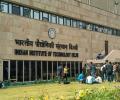
Researchers at IIT Delhi have successfully designed India's first working indigenous micro Graphics Processing Unit (GPU). This significant development aims to reduce the country's reliance on imported GPUs, which are crucial for AI, Machine Learning, and various embedded applications, and could help bridge the digital divide.

Indian digital certification authority eMudhra has reported a compromise of private keys for some of its global TLS and code-signing certificates, according to Cert-In. This incident, while eMudhra states it has limited impact on its Indian operations, could allow cybercriminals to impersonate websites. Separately, SBI has disclosed a suspected exposure of nearly 4,000 customer records on the dark web.
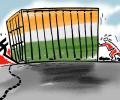
The United States and the European Union have strongly criticised India's trade policies at the World Trade Organization review, highlighting concerns over high tariffs, quality-control orders (QCOs), and restrictions on digital trade and services, which they argue undermine India's economic openness.

Digital authentication services company eMudhra has announced its decision to exit the global SSL/TLS certificate business after a vulnerability was discovered in the security keys issued by its certification authorities, leading to a 20 per cent drop in its shares.

A new EY India report highlights how young professionals, women wealth creators, entrepreneurs, ESOP beneficiaries, and digitally active consumers from Tier-2 and Tier-3 cities are fundamentally changing India's wealth ecosystem. This shift is evidenced by increased participation of young and women investors, a rise in disciplined investing via SIPs, and the crucial role of Digital Public Infrastructure in democratizing access to long-term wealth creation. The report predicts over 100 million new investors by 2035.

Prime Minister Narendra Modi has urged for a global framework to combat cross-border cyber frauds and deepfakes, highlighting the need for governments, tech companies, telecom operators, and financial institutions to collaborate. Speaking at the India Mobile Congress 2026, Modi stressed that technology thrives on trust and that India is ready to share its expertise in tackling cyber threats. He also noted the rapid expansion of 5G and the success of digital governance initiatives like Direct Benefit Transfer.

Meghalaya has shown significant progress in digital transactions and financial inclusion, recording 32.76 crore digital transactions and nearly 10 lakh Jan Dhan accounts by 2025-26. Efforts like the JAM Trinity and financial literacy programmes have expanded banking access, with a high percentage of bank account holders adopting digital modes. The next phase focuses on enhancing financial literacy and cyber resilience, especially in rural areas.

Cathy Li, Head of the Centre for AI Excellence at the World Economic Forum, advocates for integrating AI literacy into India's education curriculum and incentivising AI companies to prioritise child safety. She stresses the need for localised solutions that account for India's linguistic and cultural diversity, as well as varying levels of connectivity and digital literacy, to ensure AI systems are safe and beneficial for children.
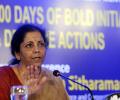
Union Finance Minister Nirmala Sitharaman expressed strong confidence in India achieving over 10 per cent economic growth, advocating for increased technology adoption and innovation. She urged overcoming scepticism and highlighted technology's transformative role in agriculture and public sector reforms, while also launching a new fund and book at an IIT Madras event.

The Delhi High Court has ruled that a private company's provision of email services does not, by itself, make it amenable to writ jurisdiction, even if the account is crucial for a user's business. This decision came as the court dismissed a petition by a media company seeking restoration of access to its Gmail account.

IBM India and South Asia MD Sandip Patel stated that India is at a defining moment with a unique opportunity to shape exponential technologies like artificial intelligence, emphasizing that "when India builds, it builds for billions," leading to scalable impact. Speaking at the IBM Think 2026 event, Patel highlighted that the AI revolution is still in its early stages, requiring enterprises to redesign their operations around agents, real-time data, automation, hybrid architecture, and trust. He also introduced the concept of "digital swaraj" or sovereignty in the Indian context, stressing the importance of control over operating environments, data, technology, and AI execution. IBM also announced an MoU with MeitY Startup Hub to accelerate India's deep tech innovation and startup ecosystem, providing startups access to IBM's technology expertise and platforms like watsonx and Sovereign Core.

Bank of Baroda has launched 'bob World 2.0', an AI-powered mobile banking app featuring voice-command capabilities for payments and navigation. The updated app also includes a personal finance management module and a persona-based customer experience, aiming to offer intuitive, secure, and personalised banking services.

The CBI has filed a charge sheet in the NEET-UG 2026 paper leak case, relying heavily on digital forensic evidence including an access control app and call data records. The investigation revealed that three NTA subject experts allegedly exploited procedural gaps to leak confidential questions for money, involving a beautician and a coaching centre owner in the distribution of the leaked material to aspirants.
Ministry of Information and Broadcasting Secretary Chanchal Kumar outlined the critical factors for the media and entertainment sector's next growth phase, including robust intellectual property, sustainable revenue models, and disciplined investments. Speaking at the CII Big Picture Summit, he emphasised the government's role in fostering an environment for creative enterprises and addressing challenges posed by digital platforms and AI. The CII White Paper also projected a USD 100 billion Indian M&E sector, advocating for stronger IP and regulatory reforms.

Jio Platforms Ltd's Rs 30,213-crore initial public offering was subscribed 3.01 times, attracting approximately Rs 66,500 crore in public bids, with qualified institutional buyers oversubscribing their portion by 9.02 times, while retail investor demand remained under-subscribed at 0.68 times.

A recent IIT Indore study highlights the evolving landscape of protest sites in Delhi, from Rajpath to Jantar Mantar, and now to more distant locations like Ramlila Maidan, Burari Ground, and CBD Ground. This shift, driven by authorities, raises concerns about the visibility, accessibility, and effectiveness of democratic protests, as moving demonstrations further away from power centres can diminish their impact and public engagement.

The All India Tennis Association (AITA) has launched a new digital platform in partnership with World Tennis Number, creating a unified ecosystem for Indian tennis. This platform will streamline registrations, tournament entries, and provide access to rankings, aiming to modernise the sport's administration and player experience.
